Nigeria Calls for Human-Centred AI at International Labour Conference
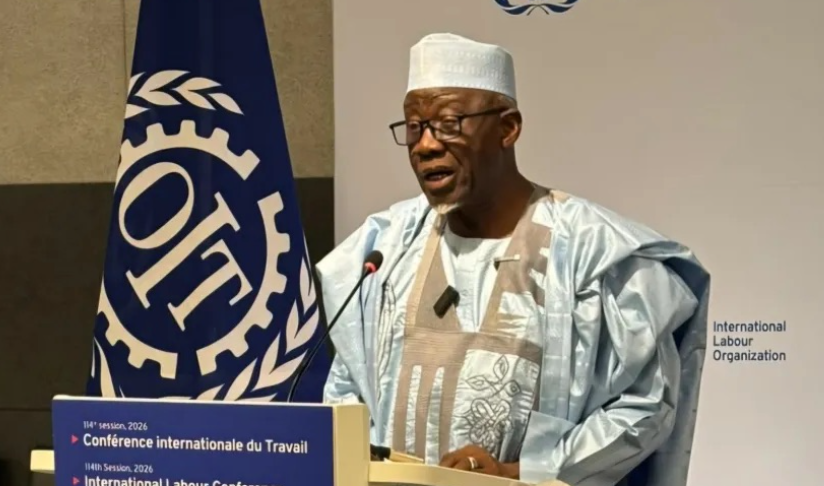
Nigeria issued a pointed warning in Geneva this month: artificial intelligence (AI) is outpacing the safety nets meant to catch the workers it displaces. At the 114th session of the International Labour Conference (ILC), held from June 1 to 12, Nigeria's Minister of Labour and Employment, Dr. Muhammad Dingyadi, called for a human-centred approach to AI. This approach, he argued, ensures technological progress serves people rather than the other way around.
Nigeria's Delegation Speaks Out
Dr. Dingyadi's address highlighted that unchecked AI adoption threatens to displace large numbers of workers and could deepen structural inequality. This is particularly true in economies like Nigeria's, which boasts a large, young, and often informally employed workforce.
His core point centered on the idea that:
If AI generates major efficiency gains and profits for multinational tech companies, those gains need to be structurally shared with the workers and societies whose jobs are affected.
The ILC's broader theme echoed this concern. ILO Director-General Gilbert F. Houngbo opened the session by telling delegates that the future of work will be shaped by policy choices, not by technology alone. He emphasized that workers everywhere need to share in AI-driven productivity gains through better wages and stronger protections.
The Gig Economy: A Pressure Point
Much of Nigeria's intervention focused on platform and gig work, a rapidly growing segment of the labor market in cities like Lagos, Nairobi, and Johannesburg. Millions of young Africans now earn income through ride-hailing apps or freelance work on global digital platforms. While this work offers flexibility, it typically comes without the protections that traditional employment provides, such as:
- No health insurance, pension contributions, or paid leave.
- Hiring, scheduling, and firing managed by algorithms with little human recourse.
- Downward wage pressure as workers compete against a global labor pool.
Oluwaseun Faleye, Managing Director of the Nigeria Social Insurance Trust Fund (NSITF), represented by Samaila Abdu, directly raised these issues in side meetings at the conference, identifying platform-based employment as a priority area for the agency.
Modernizing Social Security for Non-Traditional Work
Nigeria's delegation also held discussions with Marcelo Abi-Ramia Caetano, Secretary-General of the International Social Security Association (ISSA). These discussions aimed to extend social protection frameworks to cover workers outside the traditional employer-employee relationship. ISSA reportedly welcomed Nigeria's efforts on this front as a step toward aligning informal and platform workers with international social security standards.
The underlying argument is straightforward: an algorithm cannot cover a worker's hospital bill or fund a pension. Therefore, the platforms profiting from that labor need to contribute to national social security systems.
Broader Implications Beyond Nigeria
Nigeria's stance at the ILC comes at a moment when AI adoption is accelerating across African economies. The concerns raised apply well beyond its own borders. Kenya's tech sector, often nicknamed the Silicon Savannah, faces similar pressure to pair rapid digital transformation with legal protections for workers.
The broader consensus emerging from the conference was not that AI should be blocked, but that its deployment needs active regulation. This includes:
- Funded retraining programs.
- Labor laws that recognize platform workers as employees.
- International standards for algorithmic management.
Impact on Nigerian Businesses and Workers
For Nigerian businesses, a clearer AI policy stance could eventually bring more regulatory certainty. It could also open the door to structured social security contributions from platform companies operating locally.
For workers, especially the growing number in gig and freelance roles, it signals that the government is treating platform work as a policy priority rather than an unregulated grey area.
For professionals building careers in Nigeria's AI ecosystem, this direction is also worth watching. Continued government attention to AI governance tends to go hand in hand with growing demand for skills in:
- AI ethics
- Data analysis
- Cybersecurity
- AI-related policy and compliance work
Conclusion
Nigeria's message in Geneva was less about resisting AI and more about insisting that its costs and benefits be distributed fairly. As the ILC's broader discussions make clear, the future of work in the AI era will be shaped less by the technology itself and more by the policy choices governments make now. This includes whether platform workers get counted, protected, and paid into systems built for a different kind of economy.