Why Europe Is Racing to Reduce Its Dependence on Foreign AI
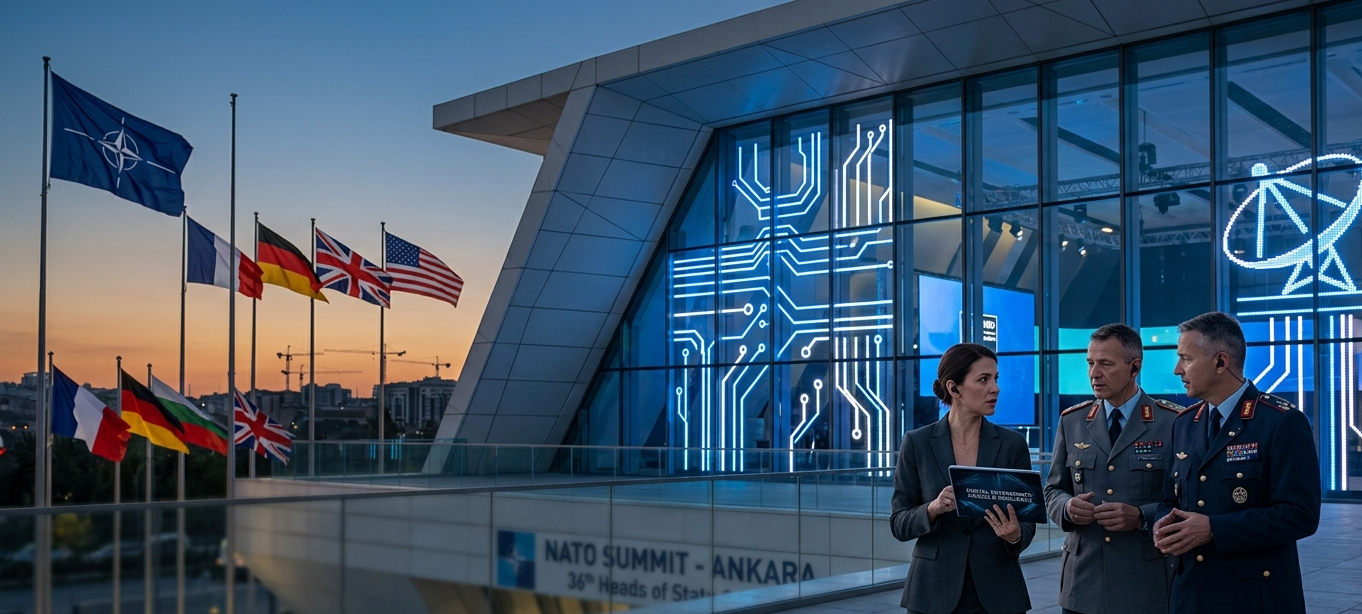
NATO leaders are set to gather in Ankara on July 7 and 8 for the alliance's 36th Heads of State Summit. Artificial intelligence has become an unusually pointed topic on the margins of an agenda officially focused on defense spending and Ukraine. The reason isn't abstract.
In early June, the Trump administration imposed export controls on Anthropic's most capable models, Fable 5 and Mythos 5. These controls barred foreign nationals from using the models, forcing a worldwide shutdown that lasted 18 days before being lifted on June 30. OpenAI's newest model rollout has also remained limited to a small group of approved U.S. firms.
For European allies watching from the outside, the episode made an uncomfortable point plainly:
Washington currently decides which countries get access to the world's most capable AI systems, and that decision can change overnight.
The Incident That Sharpened the Debate
Anthropic stated that the affected models had demonstrated unusual cyber capabilities during government testing. Claude Mythos reportedly surfaced vulnerabilities in classified U.S. systems within hours. This capability cuts both ways, serving as a defensive tool and a potential weapon.
Estonia's cyber policy ambassador, Helen Popp, told Politico that AI is fundamentally changing the threat landscape and that NATO needs to adapt. She argued that any capability available to adversaries is also available to allies willing to move first.
The episode also prompted a rare joint warning from the Five Eyes intelligence alliance about AI-related cyber threats. This was an unusual public signal of how seriously allied governments are taking the shifting balance of AI capability.
A U.S. State Department spokesperson has stated that allies must adopt what it calls trusted leading-edge AI capabilities, without fully clarifying:
- Which capabilities qualify as trusted
- Who gets to decide
That ambiguity precisely fuels European unease heading into Ankara. Officials briefed on the summit agenda say AI and cyber issues are likely to get only a brief mention in the official closing statement, with the real conversations happening in the margins.
Why "Digital Sovereignty" Isn't Just a Policy Buzzword Anymore
European policymakers have used the phrase "digital sovereignty" for years. It describes the goal of controlling critical technologies rather than relying entirely on external providers. What changed this summer is that the risk stopped being theoretical.
A government deciding to restrict access to frontier AI is no longer a hypothetical scenario used to justify long-term investment. It's something that already happened to a major ally's technology base for over two weeks.
That shift matters because NATO has begun embedding AI directly into military command through decision-support tools for commanders. Frontier general-purpose models have become central to state-of-the-art cyberdefense.
A NATO member without reliable access to top-tier AI is, in a real sense, facing a widening asymmetry in:
- Cyberdefense
- Intelligence capability
This asymmetry exists compared to allies who do have access, or with adversaries who don't depend on anyone else's permission.
Europe's Own AI Champion Still Has a Gap to Close
France's Mistral AI remains Europe's most credible answer to American frontier labs, alongside German defense AI firm Helsing, which builds AI software for military and security applications. Both are real, technically serious companies.
However, independent analysis of the AI landscape heading into Ankara concludes that:
- Only a small number of countries, realistically just the United States for now, are positioned to build models that stay at the true frontier across most domains.
- Mistral is likely to remain a capable follower rather than a frontier leader for the foreseeable future.
China faces its own ceiling here too, constrained by hardened U.S. export controls on the most advanced chips.
That's not a reason for Europe to give up on the effort. Still, it is a reason the region's AI strategy increasingly focuses on infrastructure and access frameworks rather than betting everything on directly out-innovating American labs.
The Money Behind the Rhetoric
Some of Europe's commitment is already showing up in budget lines. At the earlier Hague summit, NATO allies agreed to raise defense-related spending to 5% of GDP, split between:
- 3.5% on core defense
- 1.5% on critical infrastructure and resilience
This latter category increasingly includes the data centers and grid capacity that AI depends on. Global data center investment is on pace to exceed $1 trillion in 2026, more capital than any single government could match. This is part of why analysts argue public money is better spent hardening infrastructure against attack than trying to outbuild private capital.
That resilience question isn't hypothetical either. Iranian drone strikes on Amazon data center sites in the Gulf earlier this year demonstrated that physical attacks on AI infrastructure are no longer a distant scenario. Cybersecurity incidents increasingly target the power and cooling systems that keep data centers running – exactly the kind of grid-level vulnerability that has traditionally fallen under state, not corporate, responsibility.
What This Means for Businesses
For European companies building on AI, the practical risk isn't necessarily that access to American models disappears permanently. It's that access can become conditional, delayed, or geopolitically negotiated on short notice, as the June episode showed.
Businesses with heavy AI dependency may want contingency plans that don't assume uninterrupted access to any single provider. This includes:
- Diversifying across model providers where practical.
- Watching how quickly European alternatives like Mistral mature for production use.
For African markets, a more fragmented, multipolar AI landscape could eventually mean more providers competing for business outside their home markets. With the U.S., Europe, and China each building distinct AI ecosystems, this could lead to:
- Better pricing.
- More partnership options for African startups and governments building their own AI strategies.
Conclusion
Europe's push for AI independence used to be framed mostly as an economic competitiveness story. The events of this June turned it into a security story as well. NATO's Ankara summit is the first major venue where allies can discuss that shift face-to-face, even if only in hallway conversations rather than in the official communiqué.
Whether Europe can translate that urgency into AI infrastructure and companies that reduce real dependency, rather than just louder rhetoric about sovereignty, will say a lot about how the alliance's AI relationship with Washington looks the next time access gets suspended.